







-180x100.png)

29/10/2024
Lighting on livestock farms is not only a means of ensuring visibility, but also an important factor affecting animal health, productivity and general housing conditions. Improper or insufficient lighting can have a negative impact on the health of the livestock and is also an important factor in saving energy.
What should I consider when choosing lighting?
There are several general factors to consider when selecting the type of lights to help keep animals healthy and productive. Depending on the type of animal and the type of room, light intensity can vary greatly. For example, 200-300 lux is recommended for cows and pigs, and up to 500 for poultry. Blue light promotes calm animal behavior, while red light stimulates activity and productivity.
As for the duration of lighting, let's say that for dairy productivity, a light regime (e.g. 16 hours of light and 8 hours of darkness) that mimics the natural light cycle is important. Well, energy efficiency should be considered too, as farms run constantly, so saving energy is a significant part of the cost.
Types of lamps and their advantages
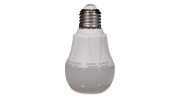
LED farm lights are the best choice for large numbers of animals that need long daylight hours (cows, pigs, chickens). LED lights use 70-90% less energy than incandescent bulbs and have a long life (up to 50,000 hours). They allow you to customize the intensity and spectrum of light to suit the needs of different animals. For example, you can use blue light to reduce stress in cows. Also, LEDs do not overheat, which prevents overheating indoors. The initial cost of LED lighting is higher, but this is offset by the energy savings and durability. Of the minuses, you can highlight the sensitivity of these lamps to voltage: they can work poorly during any fluctuations, so it is important to ensure a stable power supply. LED farm provides optimal comfort for animals and promotes productivity.
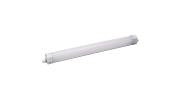
Fluorescent lamps are suitable for heated, low-energy spaces where high light intensity is not necessary. They are more economical than traditional incandescent bulbs and cost less than LEDs and can be used to illuminate small rooms or support areas. Fluorescent lamps last up to 10,000 hours on average. However, they can lose efficiency in cold temperatures, so it is best not to use them in unheated areas. Note that the mercury content of fluorescent lamps requires special disposal to avoid environmental pollution.
High-pressure sodium lamps are suitable for outdoor or warehouse lighting, but should be avoided on farms as the spectrum is not conducive to animal comfort. They provide a bright yellow-orange light suitable for large spaces such as warehouses or large units. These lamps are long lasting and can last up to 24,000 hours. However, they consume more energy than LED and fluorescent lamps. Sodium lamps have a low color rendering coefficient: the yellow spectrum does not positively affect animal performance.
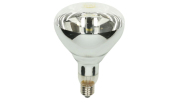
Halogen lamps are not the best choice for permanent lighting on farms, but they can be used as an auxiliary light source for localized heating or temporary lighting. They consume more electricity than LEDs and have a shorter lifespan, requiring more frequent replacement.
How to choose lighting fixtures for livestock farms?
The choice of lighting depends on the type of farm and the requirements of the particular animal or plant species. It is important to consider that lighting not only provides visibility, but also has a significant impact on their productivity. Let's take a look at what types of lighting are suitable for different types of farms.
Lighting for barns
Among the basic requirements, light intensity should be around 150-200 lux in common areas, but milking parlors need a little more - up to 300. The light regime should last 16 hours of light and 8 hours of darkness, mimicking the natural cycle. This helps to increase milk productivity. Therefore, for barns it is better to choose LED lamps with neutral-white or warm white light, they promote calm handling of animals. As an economic alternative, induction lamps can be used, as they provide sufficiently even lighting, do not flicker and have a long service life.
In poultry houses, the lighting requirements are somewhat different. In the first weeks, the lighting intensity can be as high as 500 lux to stimulate chick growth. For adult birds, 100-150 lux is sufficient. Green and blue light stimulate growth, while red light improves egg-laying performance. For laying hens, 14-16 hours of light is recommended to maximize productivity. Therefore, in poultry farms, it is better to prefer LED lights with spectrum tuning to fine-tune the color and intensity of light, which improves efficiency. Fluorescent can be used for economic lighting in poultry houses, but they are less energy efficient.
Pig farms are more recommended for economical LED lamps, which do not heat up and provide uniform lighting. Induction lamps are a good alternative as they are long lasting and provide even light.
For pigs, 100-200 lux is needed to make the animals feel comfortable. For feeding and piglet birth areas, the intensity can be increased to 300. Pigs do not need a rigid light cycle, but a certain regimen (12-14 hours of light) can maintain activity and appetite.
Vegetable and greenhouse farms also require certain lighting requirements. Here, full-spectrum LED grow lights are recommended, containing red and blue light to maximize plant productivity. Or fluorescent, which have a lower intensity but can be effective for growing seedlings. For greenhouses, LED lights with adjustable spectrum for plants, allowing you to customize the light to the phase of growth and high-pressure sodium lamps with bright yellow light to stimulate photosynthesis.
Why choose LED lighting for livestock farming in Vada?
By choosing Vada's farm lighting, farmers get an energy efficient, reliable, adaptive and modern solution that helps reduce costs, increase productivity and create a comfortable environment for animals and plants. LED and other modern lighting technologies from Vada use less energy than traditional bulbs, providing high quality light.
29/10/2024