






-180x100.png)

03/12/2024
Heating small piglets during the cold season is an important prerequisite for raising healthy pigs, as young pigs are very sensitive to temperature fluctuations. Maintaining a comfortable temperature helps prevent various diseases and promotes healthy pig growth. Let's look at why this is important, what problems arise during the cold season, and how to ensure good conditions for the animals.
Piglet heating: need or fad?
Piglets are born with a limited ability to maintain body temperature. Their thermoregulation is still underdeveloped and heat loss through the skin is significant. In the first weeks of life, the optimum temperature in the piglet's housing area should be +30+32 °C. In cold conditions, their immune system weakens and the risk of bronchitis, pneumonia and intestinal disorders increases. In cold conditions, energy is used to heat the body rather than for growth and development.
Popular methods of heating piglets
Choosing the right heating system for piglets is critical to their health and effective development. Let's look at the most common methods of use.
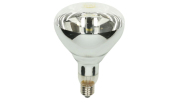
Infrared lamps for heating piglets emit heat that is absorbed by the animal's body and the surfaces of the room, creating localized heating zones. Thus, the heat is concentrated in the area where the piglets are located, thus saving energy and keeping the humidity at an appropriate level. However, these lamps depend on electricity, have a limited lifetime and if they are too close, the piglets can overheat.
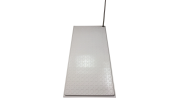
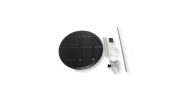
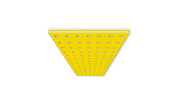
Infrared panels emit long-wave heat that provides even heating of surfaces and air. They are less energy consuming, have a longer life than lamps and consistently maintain the desired temperature.
Heat lamps for heating piglets have a dual function, illuminating and heating the room at the same time. They are economical and easy to use. The disadvantages are uneven heating, as the heat is concentrated only in certain points.
There are also special mats for heating piglets, which are built into the floor or laid on it. These are such heating devices in the form of flat mats, which are connected to the power grid. They are safe for animals, comfortable with minimal energy consumption. The disadvantage is that only the floor in the area where they are located is heated. A warm mat for piglets is an alternative to complex systems such as underfloor heating and is often used in small farms or for supplemental heating.
A warm floor for piglets in cold weather combined with other heating elements creates ideal conditions for the pigs.
Heat lamps for piglet heating have a dual function, simultaneously lighting and heating the room. They are economical and easy to use. The disadvantages are uneven heating, as the heat is only concentrated at certain points.
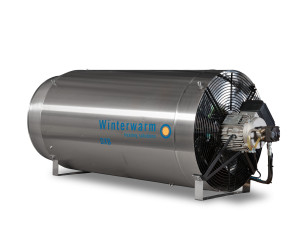
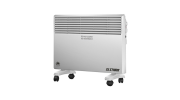
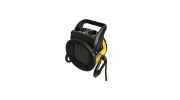
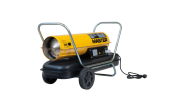
Heating for pigs can also be provided by portable heaters, which are moved around the room to create comfortable conditions in certain areas. They consume more energy than infrared systems. And, importantly, safety rules must be observed to avoid overheating or fire.
Which heating system should I choose for my pigs?
The choice of heating system depends on several factors: the size of the farm, the type of room, the needs of the animals and the financial possibilities of the farm. For newborns it is better to choose infrared lamps for heating piglets or heat mats. For young animals - infrared panels. Portable heaters can be used as an additional source of heat in large rooms.
When choosing a particular heating system, you should take into account its power. For example, for small livestock will be suitable for lamps with a capacity of 150-250 W, and for large rooms - 1-2 kW. The more piglets there are, the more power is needed to ensure a comfortable temperature.
For pigs of different ages it is important to maintain a comfortable temperature for them: for newborns - +30 +32 °C, and for older pigs - +22 +24 °C.
Safety. This too must be taken care of. Infrared lamps and portable heaters should be placed at a safe height (80-100 cm from the animals). The piglet room is often very humid, so you should choose devices with an appropriate degree of protection. It is also necessary to take care of quality insulation of the wiring. Therefore, it is better to give preference to heaters with a safety certificate and adhere to the manufacturer's instructions for installation. And lastly - check the insulation of the room before installing heaters to avoid heat loss. Well-insulated rooms require less heater power, it is important to eliminate drafts, insulate the floor, walls and ceiling.
Optimal microclimate: how to achieve it?
The main factors of a comfortable microclimate that need to be controlled are temperature, humidity, air quality and cleanliness. Adhering to these provides a comfortable environment for animals and reduces treatment costs or loss of productivity.
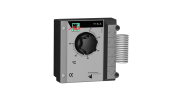
Temperature can be controlled by thermostats: heating systems with automatic regulation provide a stable environment without overheating or cooling. Ventilation should also be taken care of - a supply of fresh air without draughts. This will help prevent condensation on the walls and floor.
The humidity level in the piglet room should be 60-70%. Too high humidity promotes the development of bacteria, and too low humidity dries out the mucous membranes and worsens the health condition.
03/12/2024