

-180x100.png)
To ensure hygiene, enterprises use sanitary passes. They play an important role in controlling sanitary standards, preventing the spread of infections and protecting products from contamination. Such devices are used in many industries and businesses, and allow you to control the disinfection of hands, shoes and clothing of staff. There is a wide variety of such products, which differ in size, capacity, and control system.
What is a sanitary pass and why is it needed?
A special device used to ensure sanitary and epidemiological control at various facilities (medical institutions, laboratories, manufacturing plants) is a sanitary checkpoint. Its main purpose is to prevent the spread of infections, contamination of premises and equipment, and to ensure the safety of employees and visitors. The operation of such a system is as follows:
- Treatment of clothing and footwear. Disinfection is carried out, for example, using disinfectant mats or baths, or by using a room for changing special clothing or footwear. This prevents the introduction of bacteria and viruses from the environment.
- Hand disinfection. The equipment includes dispensers with antiseptics or detergents for hand treatment. Automatic systems that provide contactless hand hygiene can be used.
- Health checks. In some cases, health checkpoints include monitoring and control systems, for example, to measure body temperature. This will help prevent people with symptoms of infectious diseases from entering.
- Access control to areas with high sanitation requirements. This can be achieved through a variety of technical means, including automatic doors, pass readers and other devices.
Such a system is an important element of the protection system at enterprises that need to maintain special sanitary and hygienic standards and cleanliness, and prevent the spread of infections. Such systems can be used in food production facilities, pharmaceutical plants, livestock farms, and medical institutions.
Types of sanitary passes
Modern manufacturers offer to buy several types of sanitary passes. Among them:
- Automated - include automatic systems for disinfecting and treating shoes (sensor mats, washing machines), access control and even health monitoring, which reduces human intervention. They can be integrated with sensor-activated video surveillance and access control systems to automatically record all operations.
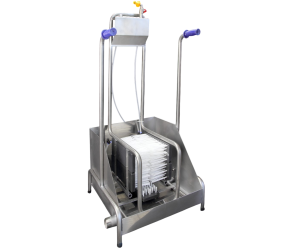
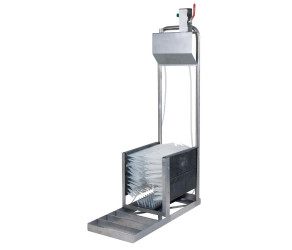
- Mobile - used at facilities where installation of stationary systems is not possible or mobility is required. Includes portable, compact devices for hand and foot treatment. Typically used at temporary sites, such as construction sites, temporary medical stations or exhibitions.
- Stationary - full-fledged control systems at large enterprises, including a full range of equipment that can ensure sanitary standards with the ability to be customised for specific tasks.
Depending on the conditions and safety requirements, sanitary checkpoints can include various elements and devices to ensure sanitary standards at a particular facility.
How to choose a sanitary barrier
To choose the right sanitary barrier and buy a device that best suits the type and needs of your business, you need to consider the main selection criteria, such as size, capacity, and control system. They can be compact (1-2 m long, 0.6-1 m wide, usually no more than 2 m high), medium-sized (2-3 m long, 1-1.5 m wide, approximately 2 m high) and large (3 to 5 m long and up to 2 m wide or more). These dimensions determine how many people can pass through the device at the same time, as well as the choice of space for placing the equipment.
An important selection criterion is also the throughput capacity, which reflects how quickly the device performs the necessary disinfection procedures and how many people can pass through it at the same time. Such mobile and stationary sanitary checkpoints can serve an hour:
- 50-100 people - suitable for small venues;
- 100-300 people - a solution for facilities with an average load;
- 500-1000 people and more - a choice for large venues.
When choosing a device, look for sensor systems, automatic dispensers and contactless features that ensure effective disinfection and control. The combination of the device with an access control system (e.g., card or biometric) can also increase security and automate the process.
The choice of model is also influenced by the type of enterprise where the checkpoint will be installed. For example, for offices and small businesses, you should choose compact options with a minimum throughput. In production areas, laboratories, and shops, it is better to install medium-sized devices with moderate throughput. And for hospitals, airports, and large factories, large products with the highest possible bandwidth are suitable. Also, pay attention to what disinfectants are recommended by the manufacturer for use in special mats and dispensers for processing.
Where to buy a sanitary barrier in Ukraine
The catalogue of the VADA online store contains a large selection of sanitary passages at affordable prices. The products sold by well-known European brands are guaranteed to be of high quality, designed for long-term trouble-free operation. Here you can find both a mobile sanitary checkpoint and other types of such devices that will best suit the type of enterprise and the goals of the events. The company offers convenient payment methods, expert advice on product selection, and guarantees prompt delivery across Ukraine . Order a reliable sanitary pass at VADA to control hygiene at your enterprise!
 Filters