










































-180x100.png)






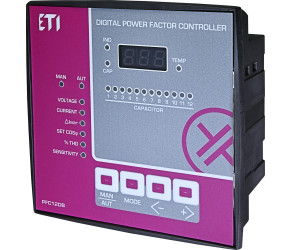
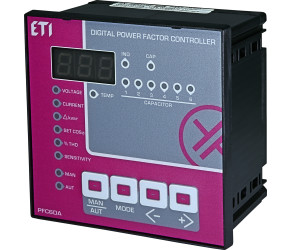
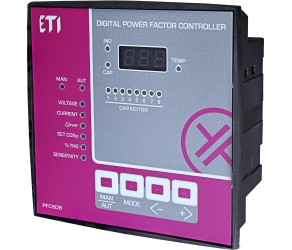
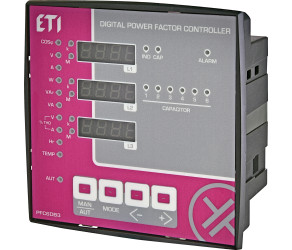
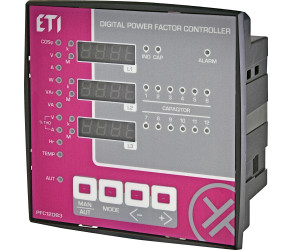
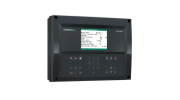
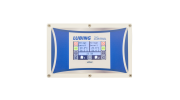
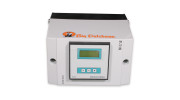
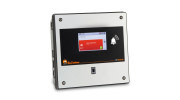
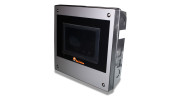
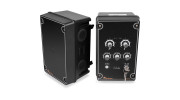
Reactive power regulators from BADA
Reactive power regulators are used where electrical networks operate with a large amount of inductive load. Power grid control devices help reduce unproductive energy consumption, stabilise power supply parameters and reduce the load on equipment. This functionality is particularly important for industrial and agricultural facilities.
For enterprises, farms, and manufacturing facilities, this means real cost savings from the very first months of operation. The VADA catalogue features reactive power regulators selected for Ukrainian operating conditions and loads.
What are reactive power regulators?
Reactive power occurs during the operation of electric motors, transformers, pumps, ventilation systems and other equipment with inductance coils. It does not perform any useful work, but creates an additional load on the network (the current overheats the cables and causes a voltage drop). Reactive power controllers monitor this process (allowing these fluctuations to be measured) and maintain an optimal power factor, adjusting system parameters in real time.
This reduces power losses, increases voltage stability and extends the service life of electrical equipment. Such devices are actively used in poultry and livestock farming, where the following operate simultaneously:
- many electric motors;
- milking machines;
- pumps;
- ventilation and lighting systems;
- automatic feeding lines.
Reactive power regulators ensure the stability of the power system. Reliable devices prevent expensive automation from failing due to unstable voltage.
How reactive power regulators work
The principle of operation of reactive power regulators is based on continuous monitoring of the phase shift between current and voltage. When the power factor deviates from the set value, the microprocessor unit sends a signal to the actuators. This leads to the connection or disconnection of the required number of capacitor stages.
Automatic control systems independently calculate the capacity required to balance the network. This eliminates the human factor and ensures maximum accuracy. Manual systems are rarely used today due to their low efficiency in dynamic networks, but they remain the basic option for stationary installations with a constant load.
Modern reactive power controllers are fully compatible with various switchboard solutions. They are easily integrated into reactive power compensation cabinets (RPC) and can transmit data to control panels via digital communication protocols. This allows the creation of multi-level energy management systems.
In addition to their main task, reactive power controllers are capable of protecting capacitor banks from overheating. This functionality makes the devices not just a means of saving money, but a full-fledged system for monitoring the state of the power grid. Thanks to the modular architecture, the number of control stages can be expanded in line with the growth of the enterprise's capacity. This ensures the long-term relevance of the installed equipment without the need to completely replace the control system.
Advantages of using reactive power regulators
The implementation of compensation systems brings direct financial benefits. The main advantage is significant energy savings due to the absence of penalties from the supplier for generating reactive power into the grid.
Increasing the power factor (cos φ) to values close to unity allows the use of the bandwidth of existing cable lines to connect additional equipment without installing new wiring. This frees up the power of transformers, which was previously spent on ‘pumping’ ballast current, and significantly increases the overall efficiency of the facility's power system and reduces heat losses in distribution devices.
In addition to the economic aspect, the devices provide reliable protection for equipment. Reducing the total current in the network reduces the risk of overloading circuit breakers and contact groups. Stable voltage, which is maintained by reactive power regulators, is critical for precision electronics and frequency converters. Ensuring stable network operation minimises the number of emergency production stoppages, which is very important for continuous cycles. Thus, the investment in high-quality components pays for itself within the first year of operation solely due to the difference in electricity bills. At the same time, the service life of all connected equipment is extended by tens of percent due to the optimisation of power supply modes.
How to choose a reactive power regulator?
For the correct selection of equipment, it is necessary to conduct a detailed energy consumption audit. The main parameter is the number of control stages: the more there are, the more accurately the device will be able to adjust to load fluctuations. For small workshops, 6 stages are usually sufficient. Large industrial facilities require 12 or even 14 stages for smooth compensation.
The measurement accuracy of the reactive power regulator is also important: modern digital modules must measure True RMS values in order to work correctly in conditions of strong harmonic distortion (often caused by the operation of a large number of switching power supplies and converters).
Professionals advise paying attention to the operating current range and the availability of intelligent functions, such as the uniform distribution of operating time between different stages of capacitors. This ensures synchronous wear of equipment and prevents the failure of individual capacitors.
If you are going to buy reactive power regulators, you should also consider climatic conditions. If the control cabinet is located in an unheated room, the device must have an appropriate operating temperature range.
A device that is correctly selected for specific operating conditions guarantees the absence of ‘overcompensation’: it can be just as harmful to the network as an excess of reactive energy. The advice of specialists when choosing a device boils down to one thing: do not skimp on the intelligent unit, because the overall efficiency of the compensation system and the safety of the capacitor banks depend on its algorithms.
If you do not have the results of an energy audit or are unsure about the number of stages to choose, VADA specialists will help you find the optimal solution for your specific operating conditions.
Where to buy reactive power regulators in Ukraine?
VADA offers not just individual components, but reliable solutions for automation and energy cost control. Here you can purchase reactive power controllers along with other items from the electrical goods category, selecting equipment for a specific project. All products are certified and meet strict operating standards. The availability of technical consultations and a full range of products at VADA also allows you to purchase electrical goods for network modernisation without unnecessary searching and the risk of component incompatibility.
By choosing VADA, you get:
- proven equipment with official certification;
- consultation on selecting a regulator for real loads;
- the possibility of comprehensive configuration of control panels;
- fast delivery throughout Ukraine.
Questions and answers about reactive power regulators
Is it necessary to install a reactive power regulator at the enterprise?
Yes, if there are many electric motors or transformers operating in the network, the regulator helps to avoid penalties and reduce electricity costs.
Is it possible to select a regulator without an energy audit?
Yes, specialists can recommend a suitable model based on the basic parameters of the network, but an energy audit ensures maximum accuracy.
Are reactive power regulators suitable for agricultural facilities?
Yes, they are effectively used on farms and poultry farms, providing stable voltage and equipment protection.
 Filters