



















-180x100.png)

Light sensors
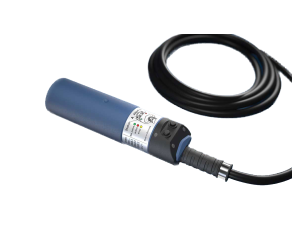
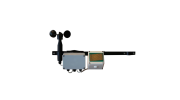
A light sensor is a device for automatically controlling artificial light sources. It is widely used in residential buildings, administrative and office premises, educational and industrial organisations.
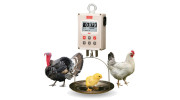
In animal husbandry and poultry farming, proper lighting affects the productivity, health and behaviour of animals, and the use of light sensors saves electricity and increases production efficiency.
What are light sensors and what are they for?
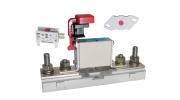
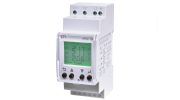
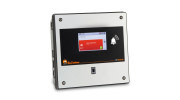
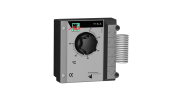
A light sensor (light relay) is an automatic switch that monitors and controls the brightness of lighting in a specific area or room.
Depending on the required light level, the sensor sends a signal to turn the device on or off. When properly installed and configured, the device operates without human intervention.
Using this type of equipment can result in energy savings of up to 10–15%.
Advantages of using sensors
Among the many advantages of light sensors, the following can be highlighted:
Advantages of using light sensors
Energy savings
Automatic switching on/off of lights
Reduced electricity costs for poultry houses, piggeries, and farmyards
Comfort and safety
Lighting of areas when motion is detected
Prevents injuries to animals and personnel, control over bird behaviour
Practicality and reliability
Sensors have a long service life and require minimal maintenance
Less downtime on the farm and lower repair costs
Touch-sensitive light sensors have increased the convenience of using artificial light sources, thereby becoming an integral part of the new automated everyday life.
Location of light sensors
Poultry houses
On the ceiling or walls, height 2–3 m, angle 120°
Control of light levels to stimulate egg production and bird growth
Pig houses
On the ceiling in the centre of the room, radius of action 5–10 m
Optimisation of lighting conditions to reduce stress in animals
Farmyards
On the facade or entrance gate
Automatic lighting of the territory for safety and reduction of electricity costs
Production workshops and warehouses
On the ceiling or wall panels, taking into account the radius of action
Energy savings and improved lighting control
Before installing a light sensor, it is necessary to pay attention to the features of its functions, installation methods and location, convenience and safety, and permissible load levels. In terms of design, it is an external motion detector or built into the ceiling or mounting box. The sensor's coverage radius, height, and angle of operation are also important.
Types of light sensors
To ensure that lighting in livestock buildings is effective and economical, it is important to choose the right type of light sensor. Each sensor has its own characteristics, advantages and limitations that affect its application. Below is a comparison of the main types of sensors.
Comparison of light sensor types
Comparison of light sensor types
| Light sensor type | Advantages of light sensors | Disadvantages of light sensors | Recommended use of light sensor |
|---|---|---|---|
| Mechanical/relay | Simple, inexpensive | Less accurate, limited automation | Small farm buildings, courtyards |
| Infrared (PIR) | Detects movement, energy saving | Does not respond to static lighting | Poultry houses, piggeries, cowsheds |
| Photo relay / digital sensor | Precise control of light levels | Higher price | Professional farms and large-scale production |
| Combined (PIR + photorelay) | Maximum savings and control | Higher cost | Industrial livestock farming, poultry farming |
VADA managers will help you choose sensors according to your goals and required parameters. The use of lighting automation devices will make your activities more comfortable and safer, as well as help you save electricity and time.
Why it is profitable to buy light sensors in the VADA online store
The VADA online store offers light sensors that are specifically designed for livestock and poultry farming. Using these devices allows you to automatically control the level of lighting, ensuring the comfort and safety of animals, saving electricity and optimising work processes. VADA managers will help you choose products according to your goals and required parameters.
Advantages of working with VADA:
- Selection of the optimal sensor for the type of farm, area of the premises, and budget.
- Energy savings of up to 10–15% thanks to automatic lighting control.
- Increased productivity and comfortable conditions for animals and poultry.
- Reliability and long service life of devices, minimal maintenance.
- Professional advice and support from company managers.
Choose VADA – ensure efficient, safe and economical lighting for your farm today! Contact us to find the perfect solution for your farm.
FAQ – Light sensors
1. What level of lighting is required for a poultry house?
Optimally, 15–20 lux for laying hens and 30–40 lux for young birds. The use of sensors ensures that the required level is maintained without manual control.
2. Can sensors be installed in damp rooms?
Yes, sensors with IP44–IP65 protection are used for piggeries and poultry houses.
3. Do light sensors really save electricity?
Yes, thanks to the automatic switching off of lights during non-working hours or when there is sufficient natural light, savings can reach 10–15%.